Before You Fly: Farmers’ Top 5 Questions About the DJI Agras T100

We’ve been talking to farmers across Canada since the DJI Agras T100 hit the ground and the same few questions keep coming up. So, let’s answer them straight up.

How big is the payload compared to the T40 or T50?

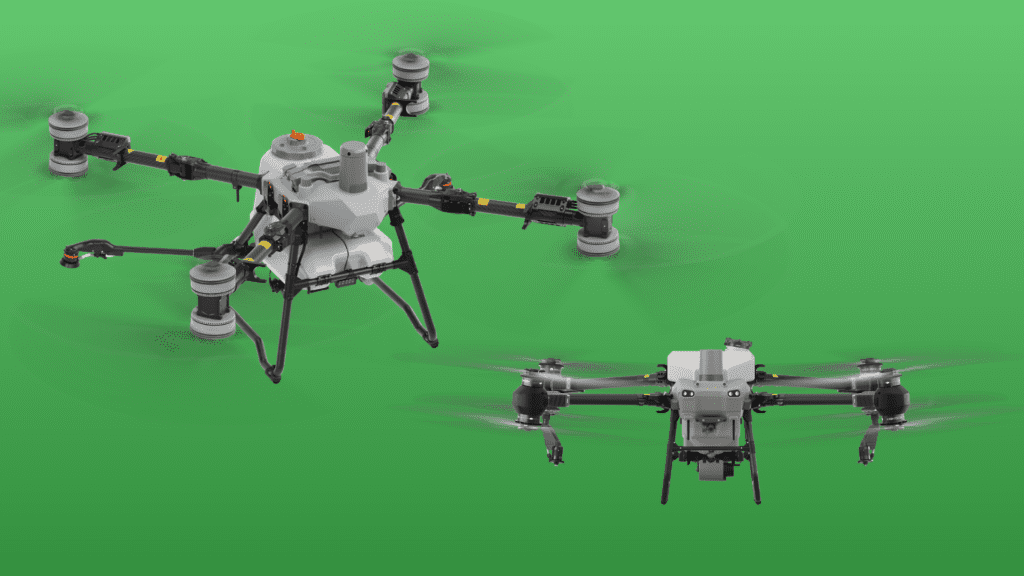
The T100 carries a 100-litre spray tank which is over double the T50 / T40 models. That means fewer refills, fewer landings, and more acres covered per hour. In real-world terms, that’s roughly 65–80 acres per hour, depending on your rate.
Can I spray herbicides with it in Canada?

This one’s important. What products you can legally apply depends on PMRA regulations, not the drone itself. The T100 is fully capable of spraying herbicides, fungicides, and liquid fertilizer but the product labels and PMRA approvals determine what’s permitted by air.

When in doubt, always double-check with your product supplier or local authority before flying.

How long does it fly on a single battery?

The T100’s high-efficiency propulsion system gives you up to 10 minutes or more of flight time, but because refilling and recharging are part of the workflow, most farmers use battery swaps and power generators for continuous operation.

In practice, that means almost no downtime between tanks.


Is it hard to learn how to fly?

Not at all. If you can use a tablet, you can learn to fly the T100.

DJI’s intelligent flight planning and auto takeoff/landing features make it easy for first-time operators. Plus, Green Aero Tech provides hands-on training, so you’ll be confident before your first solo spray.

What kind of support do I get after buying?

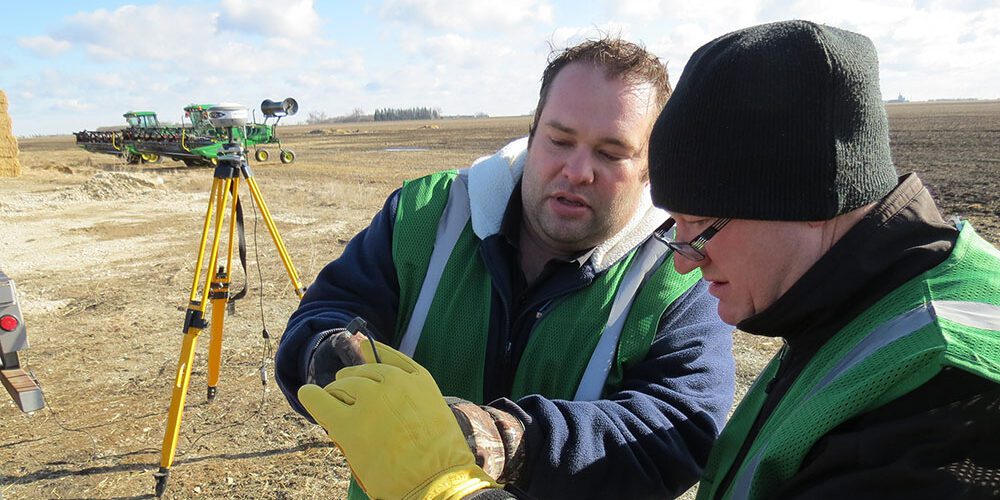
When you buy from Green Aero Tech, you’re not just getting a box. You’re getting a team that flies, sprays, and supports these drones every day.

We help with setup, maintenance, firmware updates, and technical support so you’re never left troubleshooting alone in the field.
Your Fields, Your Questions

Got more questions about how the T100 fits into your operation? We’re always up for a chat.

Book a free demo and see firsthand how the DJI Agras T100 can help you spray smarter this season.
DJI Agras T100: Drone vs Airplane

Drone vs. Airplane: How the DJI Agras T100 Changes the Game

Airplanes have long been the heavy lifters in aerial spraying—big tanks, wide swaths, high speed. But with the DJI Agras T100 now in our lineup, drones are not just closing the gap—they’re pushing forward into territory that only aerial applicators used to own.

Here’s how the T100 stacks up—using the numbers Green Aero Tech has tested and proven—and how that changes what’s possible for farms in Canada.

How Fast Can It Get the Job Done?

  • The T100 lays down 40-foot (12.2 m) spray swaths with precision application.
  • It can cover 70+ acres per hour under the right conditions with fully autonomous flight planning.

That means you can keep up with tight spray windows and cut down on wasted time, overlaps, and drift.


How Much Spray Can You Haul?

  • Spray tank: 26 US gallons / 100 liters.
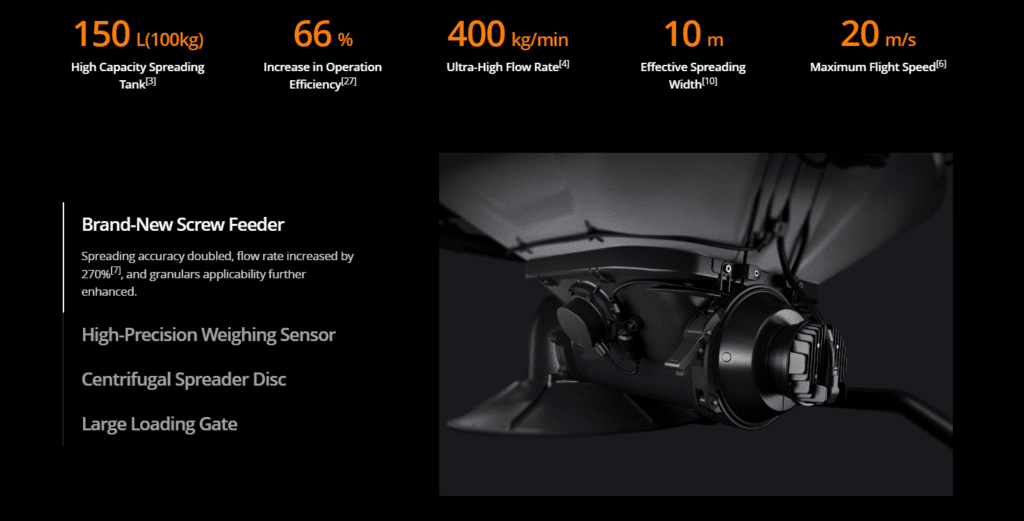
  • Spreader option: 220 lbs (≈100 kg) capacity.
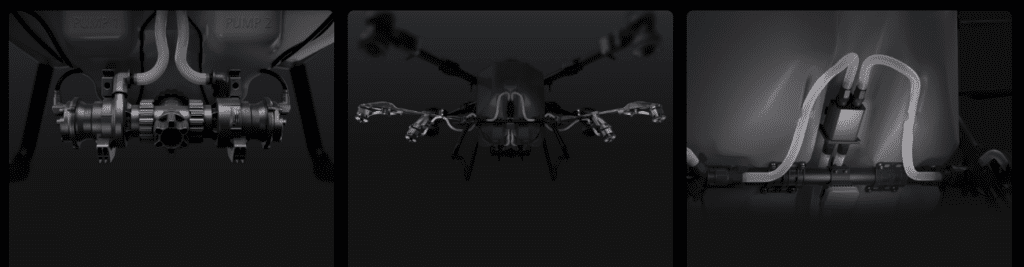
  • Dual atomization + centrifugal spraying system = uniform droplets and reduced drift.

Fewer refills, better coverage, and more acres done in one run.

What About Spreading?

  • The T100’s spreader holds up to 220 lbs.
  • Adjustable width and flow let you manage everything from cover crops to granular products with precision.

Bottom line: it’s not just for spray. The T100 pulls double duty when you need it.

Can It Handle Rough Fields Safely?

  • Water & dust resistant (IPX6K) — built tough, wash it down after a long day.
  • Smart avoidance with omnidirectional radar + vision sensors.
  • RTK positioning keeps flights accurate, even in tricky terrain.

The T100 is designed for Canadian farm conditions—mud, dust, uneven fields, and the odd surprise obstacle.

How Many Acres Per Hour?

  • Green Aero Tech testing shows the T100 can push 70+ acres/hour.
  • That’s more than double what we’ve seen with the T50, and it keeps pace with what many farms need to spray in a day.

Where Planes Still Shine — and Where the T100 Wins

Planes are still king when it comes to sheer size—covering hundreds of acres in a single load at highway speeds. But here’s where the T100 can outshine:

  • Odd-shaped or treed fields where precision is key.
  • Wet or rough ground where sprayers bog down.
  • Close to homes or towns where drift, noise, and safety matter.
  • Timing flexibility — no waiting on an aerial service.

The Bottom Line

With a 100 L spray tank, 220 lb spreader, wide spray width, rugged build, and smart sensors, the DJI Agras T100 isn’t “just another drone.” It’s a real spraying solution that puts control back in the farmer’s hands.

For Canadian farms, that means less waiting, more acres sprayed on time, and a new level of efficiency in the field.

👉 Curious what the T100 could do for your acres? Reach out to Green Aero Tech and let’s spray smarter.

DJI Agras T100 vs T50: By the Numbers

If you’ve been following along, you know the DJI Agras T50 has been a real workhorse on Canadian farms. But now the Agras T100 is here—and let me tell you, this isn’t just an upgrade. It’s a generational leap forward.

We put the T50 and T100 side by side to see what the numbers really say. Spoiler: it’s a big jump.

Speed – From Mustang to McLaren

  • T50: 22 mph top speed
  • T100: 45 mph top speed

That’s double the speed. Acres that used to take a morning to spray? The T100 can handle them in half the time. Think of it as going from a Mustang to a McLaren—faster coverage, less downtime, and more productivity.

Spray System – Bigger, Faster, Smarter

  • Tank Size: T50 – 10 gallons / 40 L → T100 – 26 gallons / 100 L
  • Spray Width: T50 – 25-30 ft → T100 – up to 43 ft
  • Flow Rate: T50 – 3 gpm → T100 – up to 10.5 gpm

Put simply: more spray, wider coverage, faster flow. At full tilt, you’re jumping from about 2.1 gal/acre on the T50 to 3 gal/acre on the T100. That means fewer stops to refill, more acres covered, and less waiting around when spray windows are tight.

Spreading System – Cover Crop Game Changer

  • Tank Capacity: T50 – 110 lbs → T100 – 220 lbs
  • Spreading Rate: T50 – 240 lbs/min → T100 – 880 lbs/min
  • Spreading Width: T50 – fixed 26 ft → T100 – adjustable 10–33 ft

The T100 ditching the old spiral channel for a modern auger system is huge. More control, faster spreading, and smoother handling of different materials. Cover cropping? This machine makes it way easier.

Flight Performance – Smarter & Safer

  • Pass Length: T50 – half-mile → T100 – full mile
  • Obstacle Sensing: T50 – 165 ft → T100 – 200 ft with LiDAR
  • Slope Handling: T50 – 50° → T100 – 90°

Now you can fly full-mile passes straight through and tackle terrain you wouldn’t even dream of with the T50. And with upgraded sensors, you’re flying smarter and safer with fewer worries about obstacles or crashes.

Acres Per Hour – Real Farm Numbers

  • T50: 30–35 acres/hour
  • T100: 70–80 acres/hour (at up to 3 gal/acre)

That’s more than double the efficiency. When the weather window is short, the T100 can make the difference between finishing your spray on time or chasing rain.

Final Word

The DJI Agras T100 isn’t just edging out the T50—it’s rewriting the playbook for drone spraying and spreading. Faster, bigger, smarter, and built for serious acres, it’s ready to change how Canadian farms get the job done.

👉 Watch our full breakdown video here: DJI Agras T50 vs T100 on YouTube

Ready to see which model is right for your farm? Give Green Aero Tech a shout. We’ll get you flying smarter, not harder.