How to Fly Smarter, Not Harder: Weather, Wind, and Spray Drone Wisdom
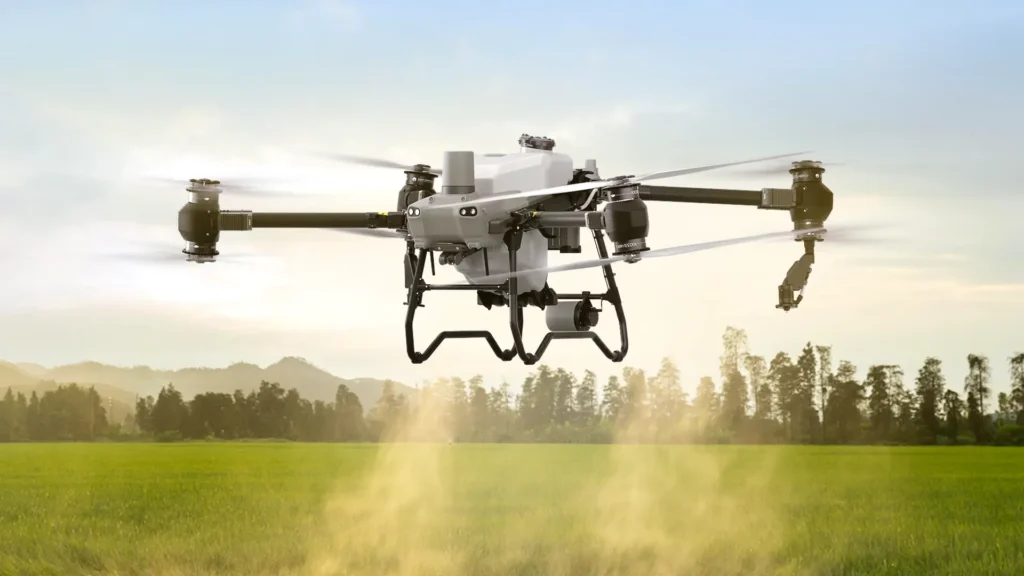
When you first get your hands on a DJI Agras T50, you might be tempted to focus on the specs—40 acres an hour! Atomizing nozzles! RTK precision! And fair enough—it’s an impressive machine.
But here’s the truth: no matter how advanced your drone is, weather still runs the show.
If you’re coming from ground rigs or aerial applicators, you already know this. Weather is the boss, and your job is to work with it, not against it.
Let’s break down what kind of conditions you should actually be spraying in—and when you’re better off waiting it out.
Wind: Just Because You Can Fly Doesn’t Mean You Should
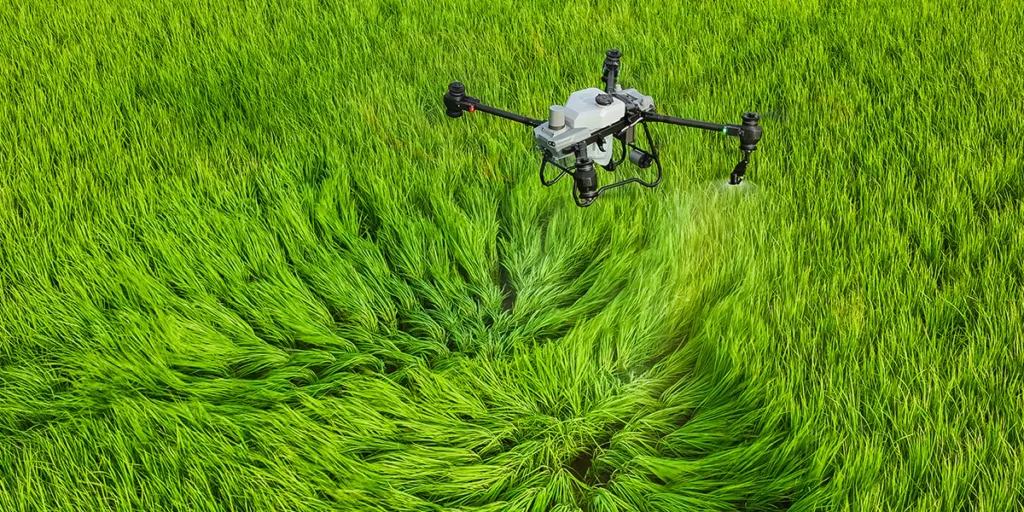
The T50 is rated for wind speeds up to 10 meters per second (that’s about 36 km/h). And yep, we’ve flown it in much gustier conditions than that. It’ll hold its position, burn through the battery a little faster, and keep on trucking.
But here’s the thing: your spray doesn’t handle the wind as well as your drone.
Spraying in strong wind is basically like trying to mow the lawn in a tornado. You might technically be “covering ground,” but your results will be all over the place—literally.
We recommend keeping your speed at or below 6 m/s (21 km/h). At that level, your droplets actually go where you want them, you’re not burning through batteries, and you’ll get consistent coverage.
Temperature: The Sweet Spot is Between 15°C and 30°C
You might not think heat is a big deal, but electronics disagree. High temperatures can push your drone’s internal systems toward thermal limits—especially if you’re flying all day.
We’ve had flights where heat caused warning messages or sluggish performance. It’s rare on the T50, but possible.
On the flip side, flying in sub-zero temps is a hard no. Not only does battery performance tank (sometimes dropping from 50% to 0% in seconds), but spray lines can freeze, and props can ice up. And frozen props = crash.
Bottom line: Stick to that 15–30°C window whenever possible and your drone (and spray pattern) will thank you.
Humidity: The Invisible Saboteur
Ever sprayed on a blazing hot day and wondered why your field looks untouched? The answer might be evaporation.
The atomizing nozzles on the T50 create fine droplets that can evaporate before they even reach the crop if the humidity is too low. That’s why temperature and humidity should always be considered together. Hot + dry = wasted product.
So while the drone might be flying perfectly, you’re not laying down anything useful if the droplets disappear in midair.
Don’t Fight the Wind—Work With It
You might technically fly in 35 km/h wind, but your spray won’t land where it should—and your battery will drain fast.
Recommendations:
- Ideal wind speed: under 21 km/h (6 m/s)
- Use hedgerows or treelines as wind breaks
- Spray into the wind to reduce drift
- If wind increases mid-job, slow down or increase droplet size
Rain, Fog & Radar
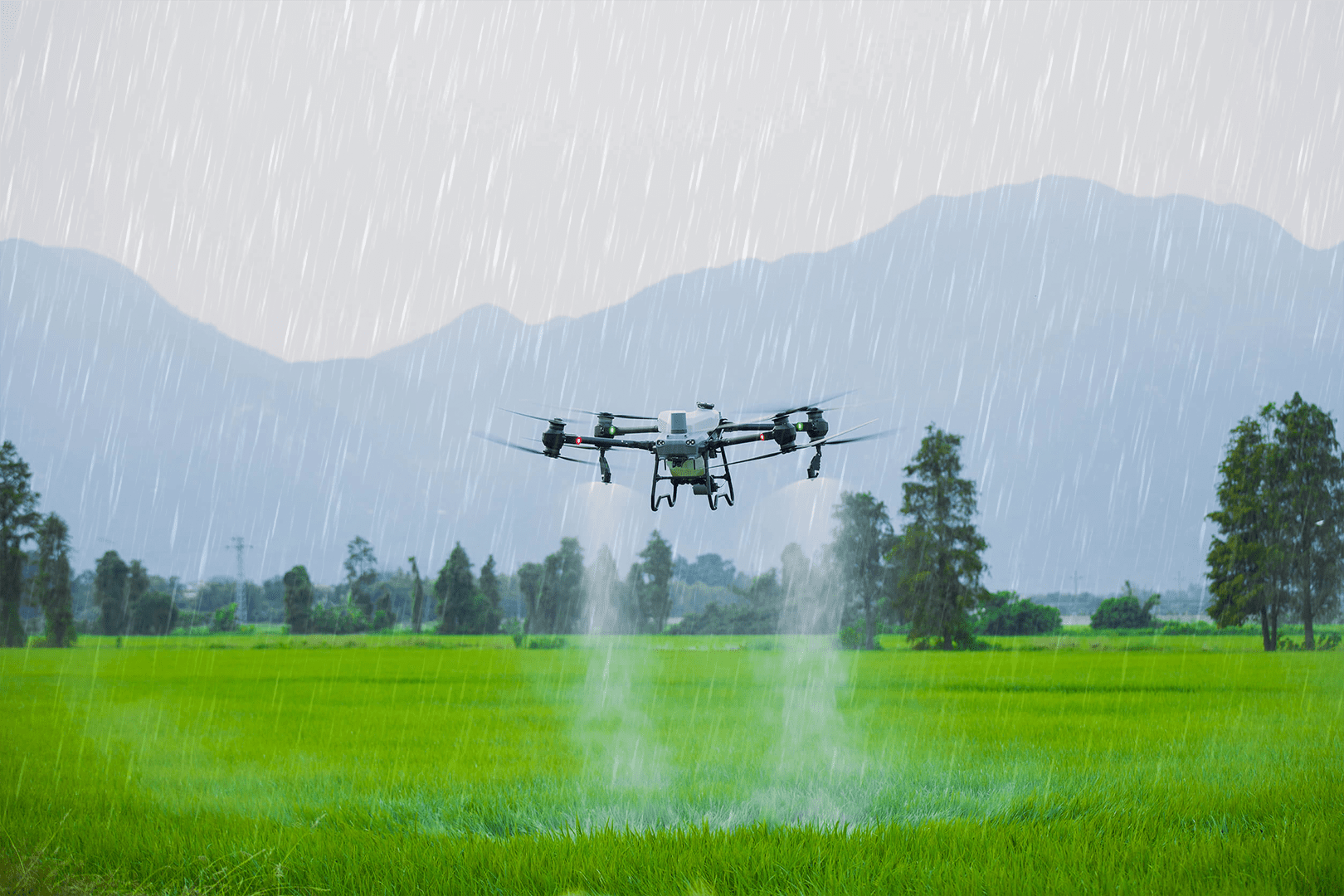
Can the T50 fly in the rain? Yep.
Should you spray in the rain? Probably not.
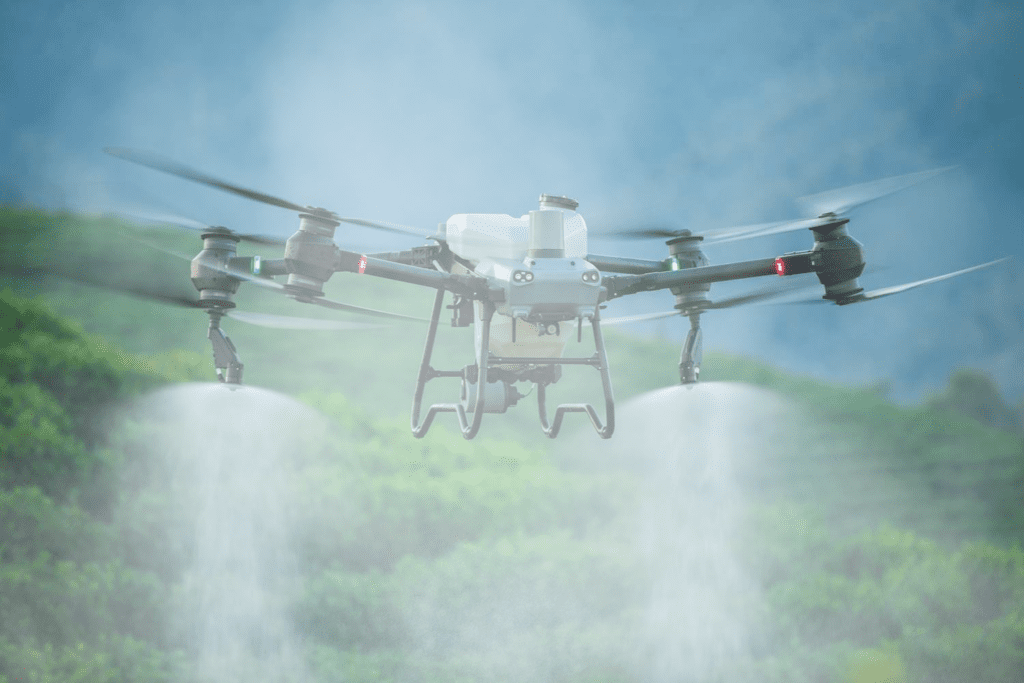
Rain messes with your spray pattern. Fog messes with your obstacle detection. Snow… well, you already know better than to spray in snow.
Even though the drone’s sensors are good, they’re not magic—and water in the air can confuse both radar and vision systems. We always say: let the drone be tough, but don’t ask it to be invincible.
Inversions: The Subtle Enemy
Inversions are those sneaky little temperature flips where cold air hugs the ground and warm air sits above it. They usually happen early in the morning or in the evening—and they’re terrible for spraying.
Why? Because your droplets can float up instead of down, and then drift off sideways to who-knows-where. We’ve seen it happen with our own eyes—a perfectly good spray job lifting up and redepositing one field over.
No matter how good your drone is, physics still wins.
Final Takeaway
Here’s the thing: the DJI Agras T50 is a beast of a drone. But just like any other farm equipment, it needs smart operators to get the job done right.
So when you’re planning a mission, check your weather—and then check it again.
Ask yourself:
- Is the wind under control?
- Is the temperature in a good range?
- Am I about to lose half my spray to evaporation?
- Is that cloud of fog going to mess with my sensors?
Spraying smarter—not harder—means knowing when to fly, when to wait, and how to make the most of every flight window.
Because good spraying isn’t about having the flashiest gear. It’s about getting the job done right, field after field.